

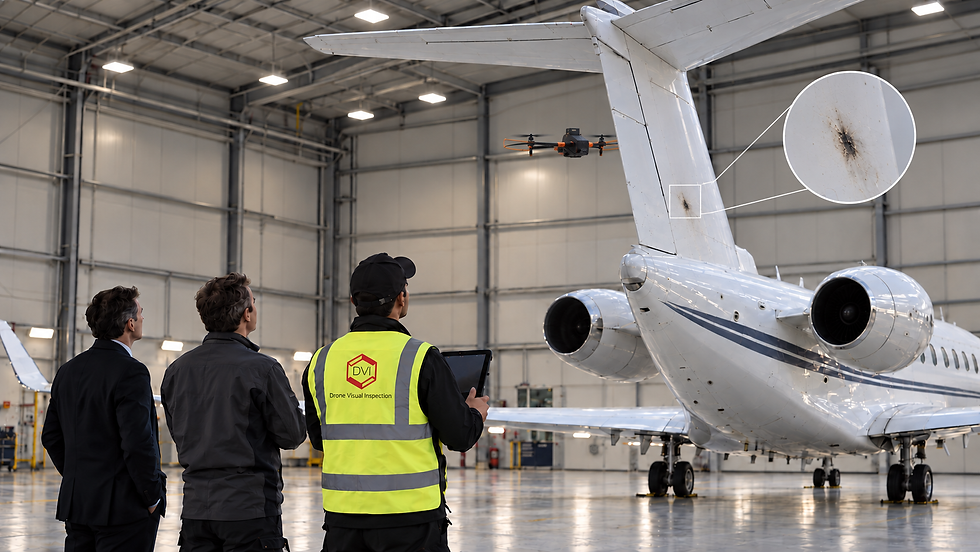
LIGHTNING STRIKE INSPECTION
Locate and document visible evidence of lightning strikes with automated drone inspection and DVI's aviation expertise.
An aircraft struck by lightning may show visible damage on different parts of its external structure, sometimes in areas that are difficult to access.
Drone Visual Inspection (DVI) supports operators, airlines and maintenance organisations in their technical investigations through automated drone photographic acquisition technology.
Our aim: to facilitate the search for, location and documentation of visible evidence of lightning strikes, supporting maintenance teams in their inspection work.
WHY INSPECT AN AIRCRAFT AFTER A LIGHTNING STRIKE?
Identify visible evidence and document areas requiring particular attention.
When an aircraft passes through a storm and is struck by lightning, electrical current may travel through different parts of its structure before leaving the aircraft.
Depending on the materials, aircraft configuration and characteristics of the event, marks may appear on external surfaces.
Visible damage is not necessarily confined to one area. Evidence may be present on the wings, wingtips, fuselage, tail surfaces or vertical stabiliser.
Automated drone inspection collects high-resolution photographs of many accessible surfaces to facilitate the search for these findings.
DVI experts can then review the acquired data to document visible anomalies and guide further investigations by competent personnel.
WHAT VISIBLE EVIDENCE OF LIGHTNING STRIKES CAN BE SOUGHT?
Depending on acquisition conditions, image resolution and inspection scope, the analysis may cover:
-
Apparent attachment points: visible marks that may correspond to an electrical current entry or exit area.
-
Localised coating changes: burn marks, discolouration or apparent paint deterioration.
-
Surface damage: small craters, pitting, apparent perforations or localised deterioration.
-
Junction areas: visible findings at certain joints, panels and external components.
-
Composite surfaces: apparent anomalies in the external coating that may require further investigation.
-
Other visible evidence: unusual findings documented within the defined inspection scope.
The presence or absence of visible marks alone cannot establish the actual extent of lightning-related damage.
WHICH AIRCRAFT AREAS CAN BE INSPECTED?
Fuselage
Searching for and documenting visible marks on accessible external surfaces, particularly the upper and side sections.
Wings and wingtips
Photographic acquisition of accessible surfaces that may show marks or apparent changes related to the event.
Vertical stabiliser and tail surfaces
Inspection of elevated areas, including the vertical stabiliser, horizontal stabilisers and associated surfaces.
Specific areas identified by maintenance
Targeted capture of additional photographs where technical teams wish to document a particular area.
Actual coverage depends on the aircraft configuration, system capabilities and operating conditions.
HOW DOES THE INSPECTION WORK?
01 — Assessing the requirement
DVI gathers the available information about the aircraft, the circumstances of the event and the areas requiring particular attention.
02 — Defining the scope
In coordination with the client, we define the images to capture and any inspection priorities, taking applicable technical data into account.
03 — Automated image capture
The drone system follows the planned flight paths and collects high-resolution photographs of accessible surfaces.
04 — Technical assessment
Depending on the selected service, our experts review usable images to search for, identify and locate visible evidence of lightning strikes.
05 — Reporting the findings
DVI supplies the photographic data and agreed technical report, including the location of findings and any limitations of the analysis.
Maintenance teams can then use this information as part of the prescribed investigations and checks.
BENEFITS FOR YOUR MAINTENANCE OPERATIONS
INSPECTION OF ELEVATED AREAS
The drone facilitates photographic acquisition of many surfaces that are difficult to access, particularly the upper fuselage, wings, tail surfaces and vertical stabiliser.
A STRUCTURED VISUAL SEARCH
Automated flight paths support a consistent acquisition method, documenting the surfaces covered within the defined inspection programme.
LOCATING FINDINGS
Identified visible evidence can be documented to help technical teams locate it and carry out further examination.
DETAILED PHOTOGRAPHIC DOCUMENTATION
High-resolution images provide visual information useful for analysis, traceability and archiving the service records.
SUPPORT FOR AOG SITUATIONS
In an Aircraft on Ground (AOG) situation, DVI can consider prioritising image capture or data analysis, subject to available resources and operating conditions.
REMOTE TECHNICAL ASSESSMENT
Previously acquired photographs can be sent to DVI for analysis, subject to their quality, coverage and usability.
ASSESSMENT TAILORED TO YOUR SITUATION
Turnkey automated inspection
DVI deploys its drone system to capture images and supply the specified deliverables.
Targeted damage search
Where areas or finding categories are precisely defined, a targeted inspection or analysis can be offered.
Comprehensive remote assessment
DVI examines the available photographic data within a scope of analysis agreed with the client.
Urgent AOG request
A priority service can be considered to support maintenance teams in their investigations following a lightning strike.
AN INSPECTION COMPLEMENTING MANUFACTURER REQUIREMENTS
Drone inspection provides visual information to complement maintenance procedures.
A lightning strike may cause damage that is not visible in photographs, particularly in certain composite materials, electrical protection components or aircraft systems.
DVI image capture and analysis do not replace detailed inspections, non-destructive testing, electrical checks or other tasks prescribed by applicable maintenance data.
The absence of visible anomalies in photographed areas does not guarantee the absence of damage.
Airworthiness decisions and approvals for release to service remain the responsibility of authorised persons and organisations.
HAS YOUR AIRCRAFT BEEN STRUCK BY LIGHTNING?
DVI supports you in searching for and documenting visible evidence of lightning strikes.
Whether you need an on-site inspection, analysis of existing photographs or urgent AOG support, we assess the available options according to your aircraft, environment and operational constraints.