

GENERAL VISUAL INSPECTION (GVI)
A new approach to aircraft visual inspection, combining automated image capture, high-resolution imagery and aviation expertise.
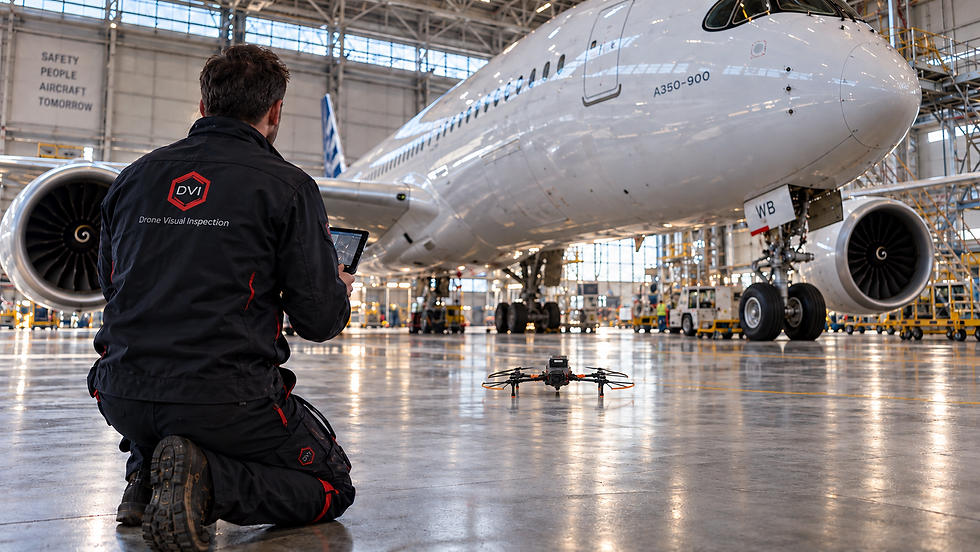
Drone Visual Inspection (DVI) supports maintenance professionals in performing General Visual Inspections of aircraft airframes using specialised automated drone photographic acquisition technology.
This solution facilitates the visual examination and inspection of external aircraft surfaces, particularly elevated or hard-to-reach areas that are difficult to access using conventional inspection methods.
WHAT IS A GENERAL VISUAL INSPECTION (GVI)?
A General Visual Inspection is a visual examination of an item, area or assembly to look for apparent conditions or anomalies, in accordance with the applicable scope and technical requirements.
As part of DVI’s services, the drone scans accessible aircraft surfaces.
Our experts can then review the collected images to identify, locate and document findings.
This approach complements conventional inspection methods and integrates into the maintenance processes of competent organisations.
WHICH AREAS CAN BE INSPECTED?
Depending on the aircraft model, site configuration and system capabilities, image capture may cover:
-
Fuselage: accessible side, upper and lower surfaces.
-
Wings: wing surfaces accessible for photographic acquisition.
-
Tail surfaces: vertical stabiliser, horizontal stabilisers and associated surfaces.
-
Elevated areas: airframe sections that normally require specific access equipment for observation.
-
External coatings: paint, visible joints, panels, junctions and other items within the agreed scope.
Actual inspection coverage is defined according to accessible areas and applicable requirements.
WHAT TYPES OF ANOMALY CAN BE DOCUMENTED?
Depending on resolution, acquisition conditions and image usability, the analysis may cover:
-
Visible dents and deformation.
-
Scratches, impacts and surface deterioration.
-
Paint chips, flaking and imperfections.
-
Visual indications suggestive of corrosion.
-
Apparent anomalies in certain external panels, joints and connections.
-
Other findings defined within the inspection scope.
Identifying an anomaly in a photograph does not, by itself, fully characterise the damage or determine compliance.
HOW DOES A DRONE-ASSISTED GVI WORK?
01 — Preparation
Identifying the aircraft, defining areas to document, checking operating conditions and preparing the acquisition programme.
02 — Automated image capture
The drone follows the planned flight paths under operational supervision and collects high-resolution photographs of accessible surfaces.
03 — Technical analysis
Depending on the selected service, DVI experts review usable images, identify visible findings and document the affected areas.
04 — Delivery
Photographic data and, where applicable, a technical report are provided to the client.
BENEFITS OF AUTOMATED INSPECTION
ACCESS TO ELEVATED AREAS
The drone facilitates imaging of many elevated surfaces and may reduce the need for certain conventional access equipment in those areas.
STRUCTURED, REPEATABLE IMAGE CAPTURE
Automated flight paths support a consistent collection method, particularly useful for periodic inspections and photographic monitoring.
DETAILED VISUAL DOCUMENTATION
High-resolution images create a photographic record of the surfaces actually inspected, supporting analysis and traceability of findings.
OPTIMISING OPERATIONS
Automation can help streamline image capture and facilitate inspection planning, depending on the environment, aircraft and requested scope.
REMOTE TECHNICAL ASSESSMENT
DVI experts can analyse the acquired data without an additional site visit, according to the service arrangements.
WHEN CAN THIS SOLUTION BE USED?
Drone-assisted General Visual Inspection can support:
-
Periodic inspections and scheduled maintenance tasks.
-
Documenting external condition before or after maintenance.
-
Pre-Purchase Inspections (PPI).
-
Creating a photographic history.
-
Visual monitoring of an aircraft's external condition.
-
Specific inspections requiring structured photographic documentation.
AN INSPECTION ALIGNED WITH YOUR MAINTENANCE REQUIREMENTS
Technology facilitates observation. Human expertise remains essential for interpretation.
Drone image capture does not automatically replace inspections prescribed by applicable maintenance manuals or maintenance programmes.
Competent personnel must take account of uncovered areas, image limitations and any additional checks required.
DVI reports are technical records of observations and do not, by themselves, constitute approval for release to service or airworthiness certification.
ENTRUST YOUR INSPECTION TO DVI
Would you like to include automated drone inspection in your maintenance operations?
DVI helps assess your requirements, define the inspection scope and select a solution suited to your organisation.
Whether for a one-off assignment or recurring needs, we assess deployment options according to your aircraft, site and operational requirements.